
Overview of Leadership Lessons Startups Can ApplyMy leadership approach emphasizes trust, empowerment, agility, and customer-centric thinking, providing a practical roadmap for startups navigating rapid change. Over the years, I’ve focused on building resilient teams, adapting to evolving markets, and leveraging innovation, practices I believe are essential for modern founders. These lessons have helped me guide startups to strengthen their culture, accelerate growth, and stay closely aligned with real customer needs. |
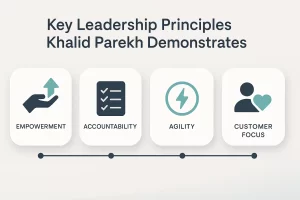
Understanding Khalid Parekh’s Leadership Philosophy
Building Teams That Can Scale
I’ve always believed that achieving scale starts with building teams that can take initiative and collaborate effectively. Resources are often limited in early-stage startups, but a strong culture and clarity can turn small teams into high-performing ones.
Building Strong Teams Through Trust and Empowerment
For me, trust is the engine of innovation. When people feel trusted, they gain confidence to take ownership of their roles and offer new ideas. Empowerment allows teams to explore solutions without fear of failure, a crucial mindset for startups that must learn, iterate, and pivot quickly.
I also prioritize psychological safety. Teams perform best when they feel curiosity is encouraged, and failure isn’t punished. By giving my teams the freedom to experiment and learn, I strengthen collective resilience and accelerate problem-solving. This approach creates stability, even in the fast-changing phases of startup life.
The Role of Clear Communication in Early-Stage Companies
Clear communication is essential to ensure everyone understands the mission, priorities, and expectations. In startups, misalignment can be costly. I make it a point to communicate consistently and transparently. This reduces confusion, prevents duplicated efforts, and keeps everyone focused on our shared goals.
Direct and honest communication also reinforces accountability. When my teams understand why decisions are made, they feel connected to the company’s purpose. That clarity drives momentum as everyone moves forward together with confidence.
Agility as a Leadership Advantage
Startups operate in unpredictable environments where plans shift, customer needs evolve, and competition can appear overnight. Agility allows me and my teams to respond quickly, make informed decisions, and adjust strategies before challenges become setbacks.
Why Agility and Innovation Matter for Startup Growth
In my work with AI globally, including my role on the NVIDIA Global AI Partner Advisory Board, I’ve seen firsthand how staying agile drives innovation. Rapid testing, learning from feedback, and iterating quickly give startups a crucial advantage in crowded markets.
Agility also supports rapid learning. Startups that test ideas quickly can gather insights, refine assumptions, and move forward without wasting time and resources. This increase in learning speed gives them an advantage in crowded markets.
Adapting to Market Shifts With Confidence
I emphasize data-informed decisions. Staying close to metrics gives me clarity on customer behavior, performance trends, and operational challenges. This allows me to pivot confidently and stay ahead of disruptions.
Adaptability strengthens resilience. Whether adjusting product roadmaps, shifting marketing strategies, or rethinking revenue models, flexibility lets startups remain competitive. With this mindset, obstacles become opportunities for reinvention and growth.
Customer-Focused Leadership for Competitive Advantage
Customer-centric thinking is central to how I lead. I’ve always believed that successful companies solve real problems, not assumed ones. For startups, this perspective is transformative because early customer experiences shape brand reputation and long-term loyalty.
Customer-Centric Decision-Making
I encourage my teams to prioritize the customer first. Listening carefully, integrating feedback, and designing products that meet actual needs builds stronger relationships and trust. By focusing on customer value over internal convenience, we accelerate innovation and strengthen product-market fit.
This approach also supports faster innovation. When teams understand what customers want, they can prioritize features more effectively and avoid investing in unnecessary ideas. This increases efficiency and strengthens product-market fit.
Turning Customer Problems into Growth Opportunities
I see customer challenges as opportunities to innovate. Every complaint or request reveals insights into what the market wants next. Treating these pain points as strategic inputs allows startups to refine their roadmaps and improve user experiences, ultimately increasing retention and referral growth.
This mindset leads to stronger retention and more referral growth. Companies that listen carefully often build deeper trust because customers feel heard and understood.
Final Thoughts
My journey as a leader has shown me that trust, empowerment, agility, and customer focus aren’t just buzzwords; they are essential tools for startup success. By applying these principles, founders can build stronger teams, innovate continuously, and stay aligned with customer needs. Leadership rooted in authenticity and purpose creates the resilience and momentum startups need to grow with confidence and vision. I hope sharing my experiences helps other entrepreneurs navigate the challenges of building and scaling their ventures.
Explore my latest work to see how I’m continuing to shape the future of technology and entrepreneurship.